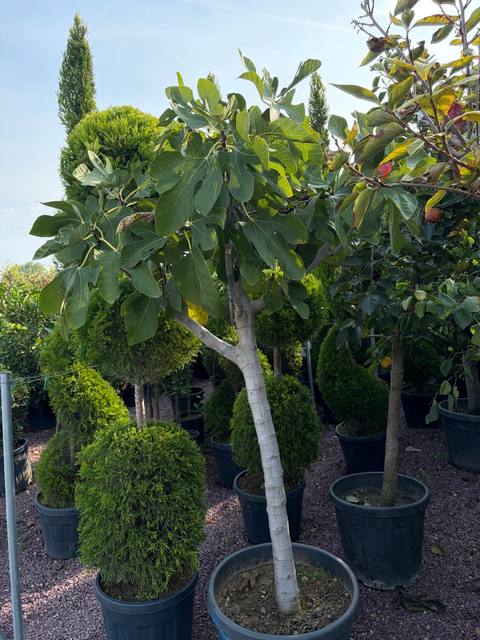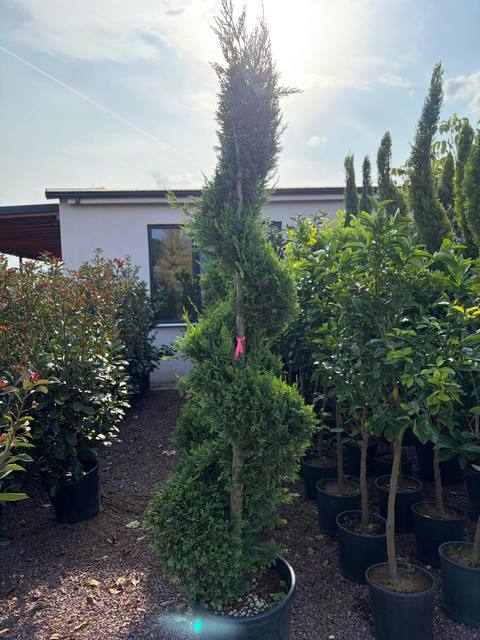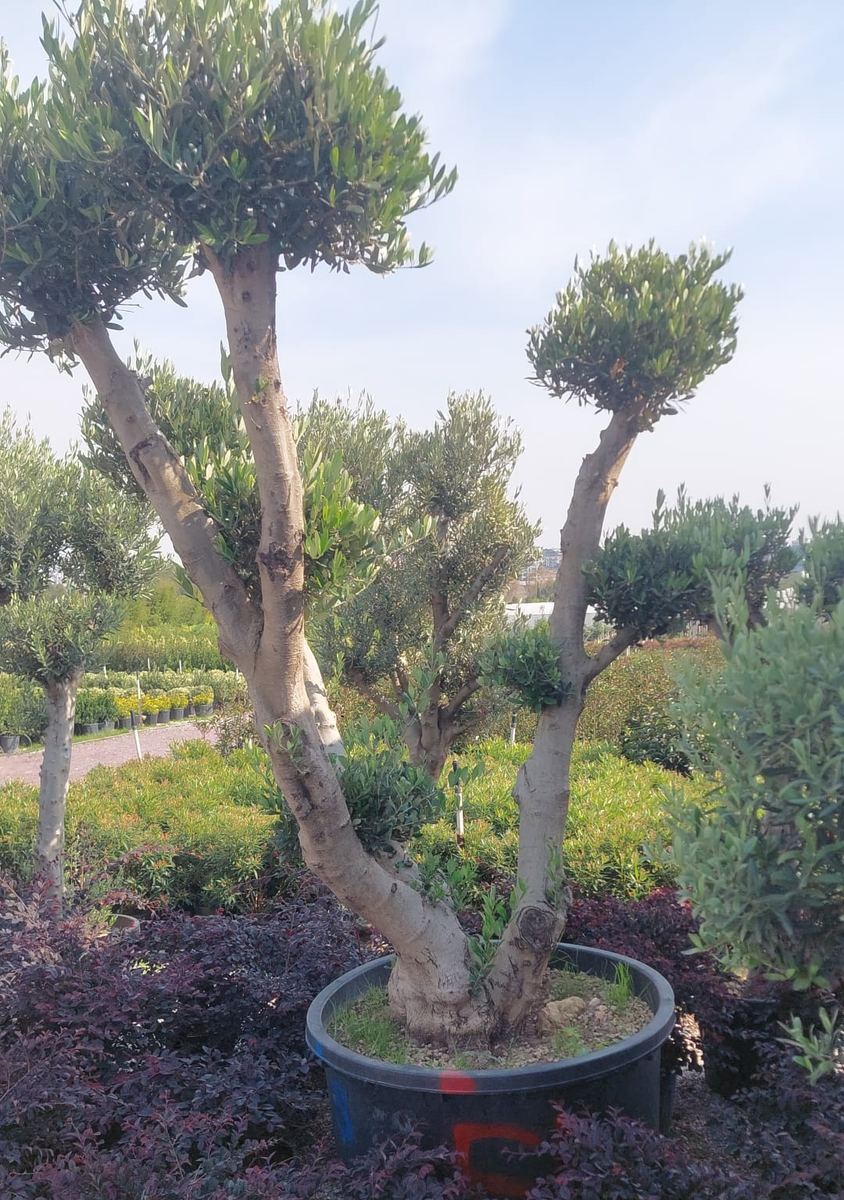
Using pom-pom and ball-shaped olive, bay laurel, citrus and fig as specimen trees: trunk, form and cold-tolerance criteria.
Olive, bay and citrus are "specimen" trees that give a garden or an entrance its character on their own. Unlike shrubs, each one is selected individually; its trunk and form are judged piece by piece. Three criteria are enough: trunk, form and the site's winter temperature.
Shaped olive (Olea europaea)
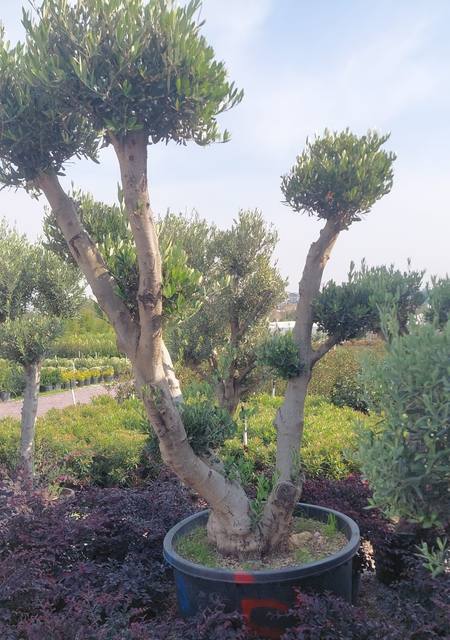
Olive responds to pruning better than any other Mediterranean tree, which is why it can be trained over years into a pom-pom (multi-ball), single ball or natural spreading crown. Trunk girth (circumference, cm) and trunk character drive both price and effect: a gnarled, mature trunk gives an established look the day it is planted. The grey-silver foliage contrasts strongly with dark green hedges. Hardy to about −8/−10 °C; trouble-free on the Marmara and Aegean coasts, needs a sheltered spot inland.
Bay laurel (Laurus nobilis)
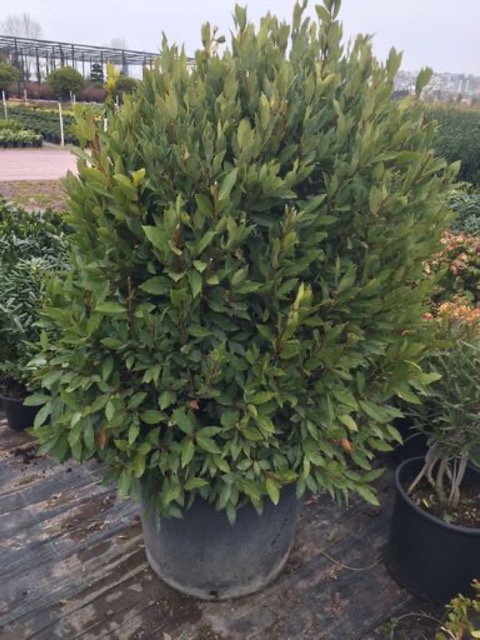
Bay works both as a hedge and as a specimen and is among the most shade-tolerant Mediterranean trees. It is grown as a standard (clear-stem) ball and as a cone; it stays dark green all year and tolerates more cold than olive. A symmetrical pair flanking an entrance is a classic use.
Citrus: lemon, orange, mandarin
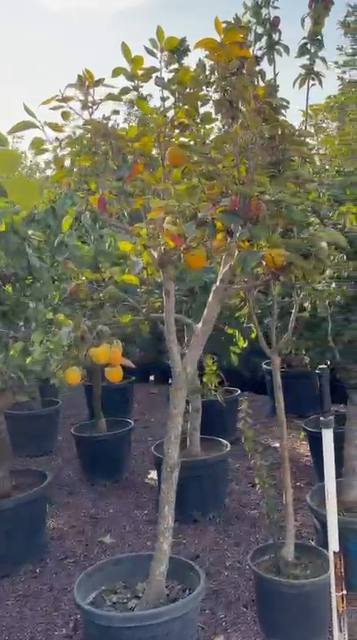
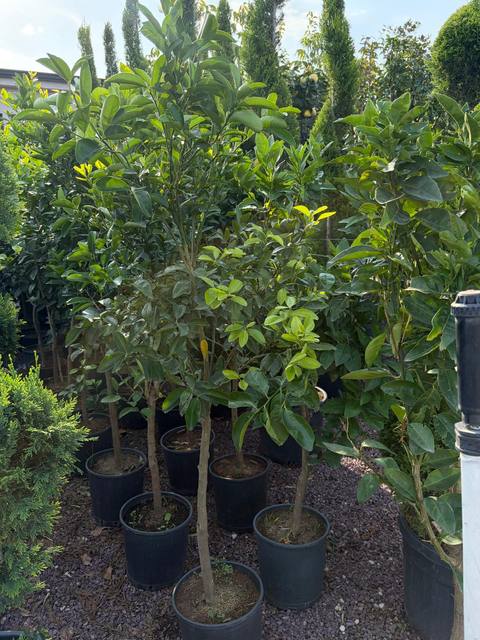
A fruiting tree adds an appeal no other plant can. Lemon, orange and mandarin are supplied as standards at an age that fruits from the first year. Citrus has one rule: winter. Sustained frost below −3/−4 °C causes damage. In the Marmara region it needs a south-facing, wind-sheltered position or winter fleece; on the Mediterranean and Aegean coasts it stays outdoors. Growing in a large container and moving under cover in winter is another common solution.
Fig and quince
Fig, with its large leaves and grey trunk, is an essential part of the "Mediterranean courtyard" look; deciduous, but strong in winter silhouette too. Quince draws attention in all seasons with spring blossom and autumn fruit. Both are far hardier than olive and citrus.
Planting and first-year care
- Good drainage is essential; on heavy clay, lay a sand-gravel layer at the base of the pit.
- Stake standard trees for the first two years; if wind rocks the root ball, establishment is delayed.
- Shape olive once a year (late winter) and bay once or twice; on citrus remove only dead and inward-growing wood.
- Mediterranean trees are drought-tolerant, but need regular watering in the first summer after moving from container to soil.
Recent photographs of our shaped olive, bay and citrus production are in the from the field section. If you are looking for a particular trunk size or form, write to us for photographed stock information.